Introduction to Campfyre
After the Verizon outage in Jan of 2026, I wanted a backup internet connection that I could put in a car or take with me if I needed. So I built this.
Meet Campfyre. It’s a battery powered and ruggedized network-in-a-box. Campfyre can run completely off-grid with Starlink, providing internet access when you need it most. Campfyre can also be charged from a car’s 12V system, and is sealed to prevent water damage. It’s easy to build and requires only simple tools to assemble. So how does it work? Let’s get into it.
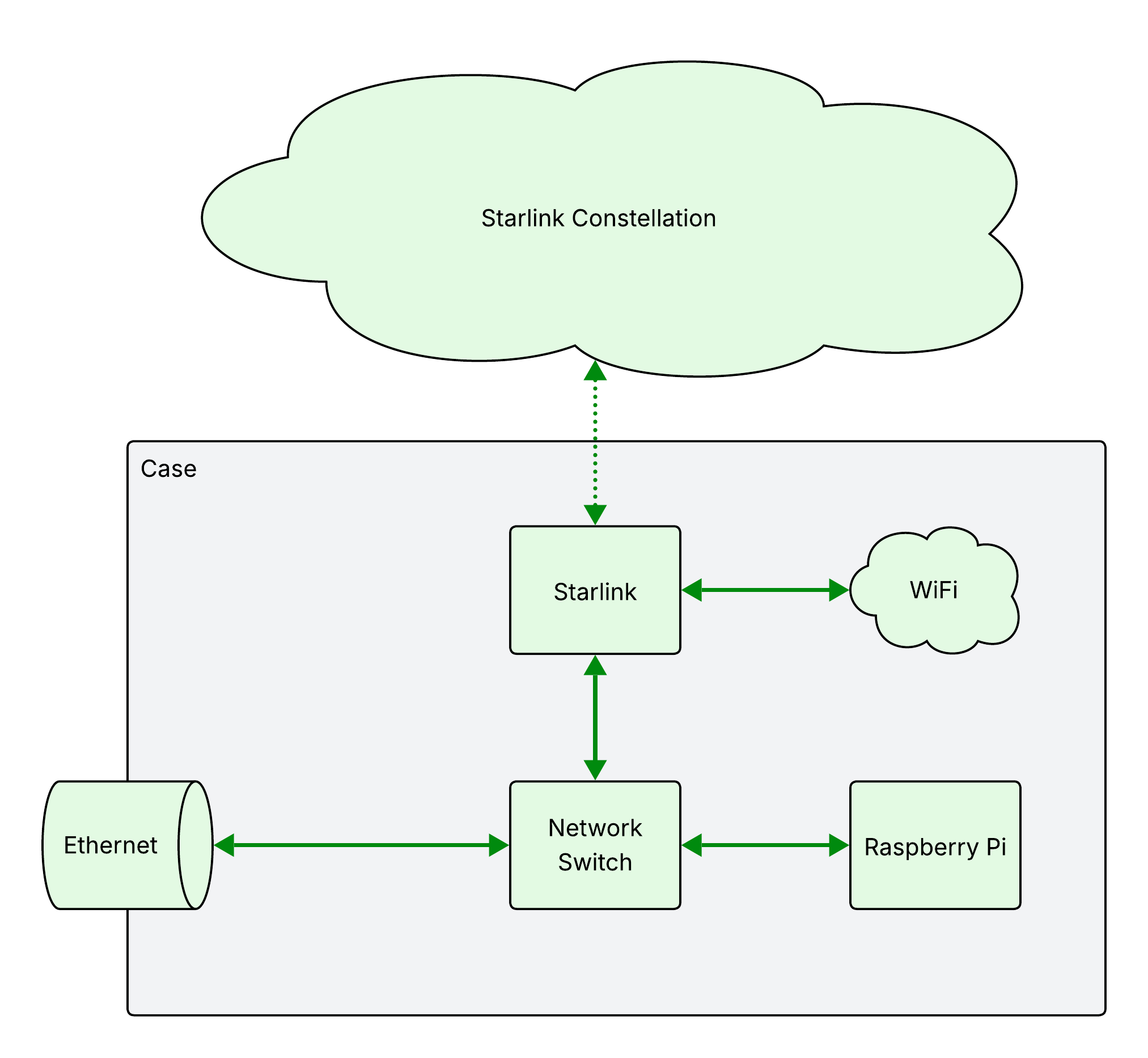
The main feature of Campfyre is centered around a Starlink Mini. The Starlink Mini hosts a WiFi hotspot and has an Ethernet port, which is then connected to a network switch. Because Starlink acts as a router, any device connected to the switch can talk to the Internet, including a device connected to the external Ethernet jack on Campfyre. In theory, an entire building could receive its internet access through Campfyre (though speeds would be limited by how fast Starlink can transmit and receive data).
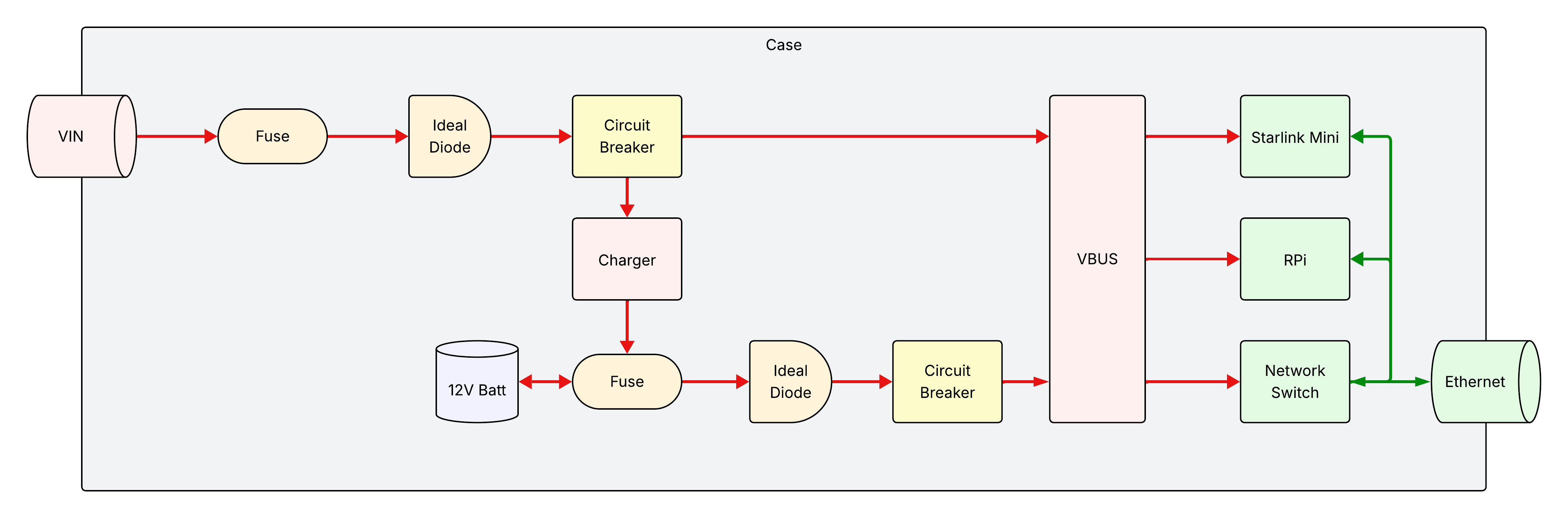
Next, let’s talk about how it’s powered. Campfyre has two primary input sources - external DC, and the internal LiFePO4 battery. It then has a shared power bus, called VBUS, where the main power supplies connect to and draw from. It feeds the Raspberry Pi (via a 5V power supply), the Starlink dish, and the network switch. Campfyre can run for approximately two hours under heavy usage, or up to four and a half hours maximum.
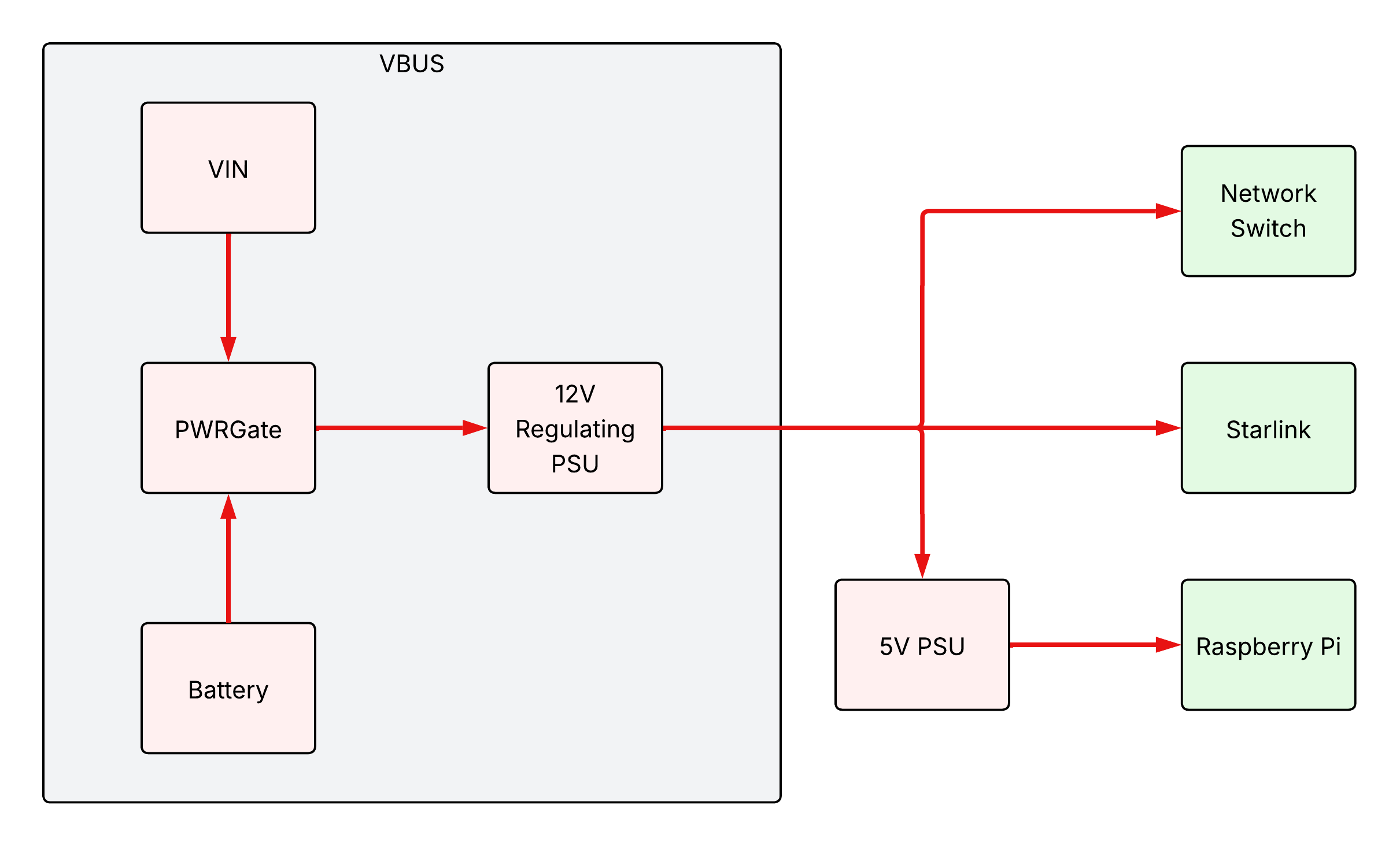
To generate VBUS, external power and the battery connect to what is called a power path controller that selects which input to use to supply the downstream devices, giving priority to external power. This means that when Campfyre is plugged in, it will charge the battery while keeping Starlink, the network switch, and the Raspberry Pi online. The power path controller feeds into a 12V regulating power supply. That then feeds directly to the Starlink and the network switch, and into a secondary power supply for the Raspberry Pi.
break to image of Campfyre
The last important feature is the case in which everything is built. It’s a standard, off-the-shelf camera case with a waterproof seal and pressure equalization valve. This means that Campfyre should be safe in the rain, though submerging it in water is not recommended. The case is made of radio-transparent polypropylene, so Starlink can communicate efficiently through the lid of the case, as long as it has a clear view of the sky.
Campfyre is a ruggedized network-in-a-box for camping, traveling, or just a backup internet connection if your home internet goes out. In the next video, you’ll learn how to build your own Campfyre, where to get the parts, and what to expect from the process.